

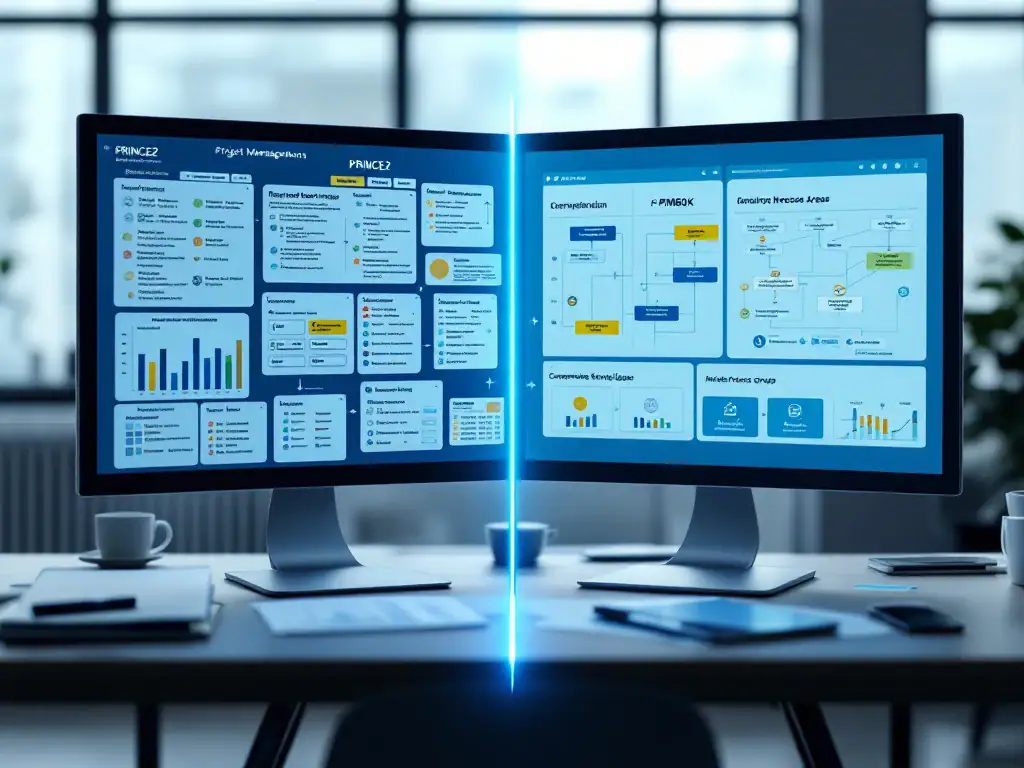
PRINCE2 and PMBOK are both important project management approaches, but they differ in several ways. PRINCE2 is a process-oriented method with clearly defined roles and structures, while PMBOK is a knowledge framework that offers more flexibility in execution. PRINCE2 originated in the UK and is popular in Europe, while PMBOK originated in the US and is used worldwide. The choice between the two depends on your project type, organizational culture, and specific objectives.
What exactly are PRINCE2 and PMBOK?
PRINCE2 (PRojects IN Controlled Environments) is a process-oriented method for project management. Developed in the 80s by the British government, it offers a structured approach with clear steps, roles, and responsibilities. PRINCE2 focuses on delivering products according to an established business case.
PMBOK (Project Management Body of Knowledge), on the other hand, is a knowledge framework developed by the Project Management Institute (PMI). It describes best practices, terminology, and guidelines for project management, but does not prescribe how to apply them. PMBOK originated in the United States and has grown into a global standard.
Where PRINCE2 offers a complete method with prescribed processes, PMBOK gives you a collection of knowledge and techniques to draw on. PRINCE2 says “do it this way”, while PMBOK says “here are the tools you can use”.
What are the fundamental differences between PRINCE2 and PMBOK?
The main difference is that PRINCE2 is a complete methodology , whereas PMBOK is a knowledge framework . PRINCE2 describes exactly which processes to follow from start to finish, while PMBOK offers you a collection of knowledge and tools without prescribing how to use them.
PRINCE2 originates from the United Kingdom and is particularly popular in Europe, Australia and government organisations. PMBOK originates from the United States and is recognised worldwide, particularly in North America and Asia.
The approach to project phases also differs. PRINCE2 works with seven clear processes that you apply in each phase, such as 'Starting up a Project' and 'Controlling a Stage'. PMBOK describes five process groups (initiating, planning, executing, monitoring and closing) and ten knowledge areas that are relevant throughout the project.
| Aspect | PRINCE2 | PMBOK |
|---|---|---|
| Type | methodology | Knowledge Framework |
| Origin | United Kingdom | USA |
| Structure | 7 processes, 7 principles, 7 themes | 5 process groups, 10 knowledge areas |
| Flexibility | Prescribed processes | Flexibly applicable knowledge |
How do the roles and responsibilities within PRINCE2 and PMBOK differ?
In PRINCE2, you work with specifically defined roles in a hierarchical structure. The key roles are the Project Board (with Business Executive, Senior User, and Senior Supplier), the Project Manager, and Team Managers. Each has clear responsibilities and authority.
PMBOK is less prescriptive in roles and focuses more on the responsibilities of the project manager himself. The project manager has a more central position and more freedom in determining the project organization.
PRINCE2 has a clear distinction between decision-making (Project Board) and daily management (Project Manager). PMBOK emphasizes the project manager as the linchpin in the network, who weighs up different interests and makes decisions.
The difference in role approach means that PRINCE2 is often better suited to organisations with formal structures, while PMBOK is more flexible for different organisation types.
When do you choose PRINCE2 and when do you choose PMBOK?
Choose PRINCE2 if your organization needs clear structure and control. It works well for:
- Formal organizations such as governments and large companies
- Projects with strict compliance requirements
- Situations where clear decision-making is important
- European organisations (due to familiarity and acceptance)
Choose PMBOK if you need flexibility and a broad toolkit. It fits well with:
- Organizations with various project types
- US or internationally operating companies
- Situations where the project manager has more autonomy
- Organizations that combine different methodologies
The choice also depends on your industry. In IT and consultancy you often see a mix, while governments and regulated sectors often choose the PRINCE2 structure.
Can PRINCE2 and PMBOK be used together?
Yes, PRINCE2 and PMBOK can work together as excellent complements . They do not exclude each other but complement one another. Many organizations combine the best of both worlds.
For example, you can use the clear processes and role divisions of PRINCE2 for the project structure, while applying specific tools and techniques from PMBOK for the execution. For example, you use PRINCE2 for 'what and when' and PMBOK for 'how'.
A practical hybrid approach might be:
- Using PRINCE2 for project management, reporting and phase transitions
- Apply PMBOK techniques for planning, risk management and stakeholder management
- Combining the Business Case from PRINCE2 with the detailed scope definition from PMBOK
By consciously choosing which elements of both methods to use, you make project management more effective and better suited to your organization.
Conclusion: The right project management methodology for your organization
The choice between PRINCE2 and PMBOK is not a question of 'better or worse', but of what suits your specific situation best. PRINCE2 excels in structure and clarity, while PMBOK offers you more flexibility and a broad knowledge base.
For many organizations, a combination of both works best. Start by analyzing your projects, organizational culture, and needs to determine which elements you need.
At Lagant we help organisations make these choices and implement the right project management approach. We look at what works best in your specific context, so that your projects run successfully and deliver results.
Would you like to know more about how to implement PRINCE2, PMBOK, or a combination of both in your organization? Then contact us for tailored advice.