

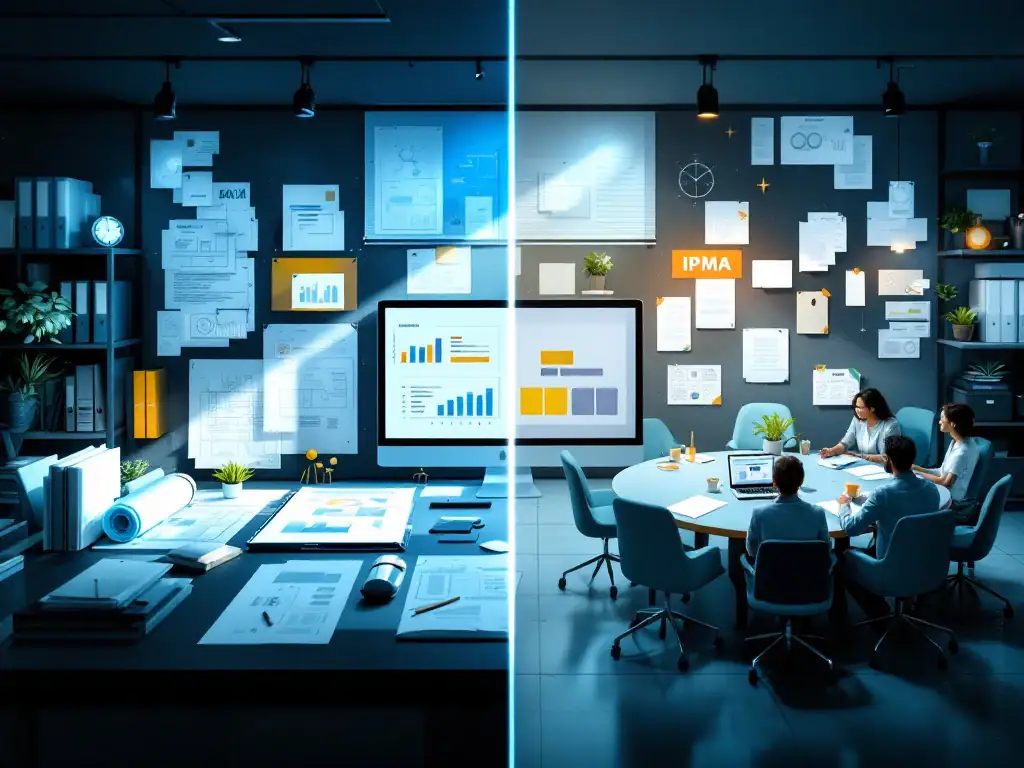
PRINCE2 and IPMA are two different approaches to project management. The main difference is that PRINCE2 is a methodology that focuses on the project management process, while IPMA is a competency framework that focuses on the skills and knowledge of the project manager himself. PRINCE2 gives you a step-by-step plan with specific processes, while IPMA assesses you on your personal competencies as a project manager. Your choice depends on whether you need a structured method or step-by-step plan (PRINCE2) or a development path for your project management skills (IPMA).
What are PRINCE2 and IPMA?
PRINCE2 (PRojects IN Controlled Environments) is a process-oriented project management method originally developed by the British government. It provides a structured approach with clear processes, roles and responsibilities for managing projects. PRINCE2 is based on seven principles, seven themes and seven processes that help you to execute projects in a controlled manner.
IPMA (International Project Management Association), on the other hand, is an international organization that focuses on the competencies of project managers. The IPMA Competence Baseline (ICB) describes the knowledge, skills, and personal attributes that an effective project manager needs. IPMA assesses not so much how you execute a project, but rather who you are as a project leader.
Where PRINCE2 tells you what to do in which situation, IPMA helps you understand which competences you need to handle different project situations. IPMA originated in Europe, where it was founded in 1965 as a network for the exchange of project management experiences.
What is the main difference between PRINCE2 and IPMA?
The core difference between PRINCE2 and IPMA lies in their fundamental approach: method versus competence . PRINCE2 is a methodology that describes step-by-step how to approach a project, regardless of who is carrying it out. It provides you with detailed processes, document templates, and decision points for your project.
IPMA, on the other hand, focuses on the person leading the project. It assesses you on personal competencies such as leadership, communication and conflict management. IPMA assumes that a skilled project manager can apply different methods depending on what the project needs.
When working with PRINCE2, you follow a set structure with defined phases. With IPMA, you develop yourself as a project professional, learning to choose the right approach based on the context. You could say that PRINCE2 is about 'what' needs to be done, while IPMA is about 'who' needs to do it and 'how' that person can best act.
How do the PRINCE2 and IPMA certification levels differ?
The certification structures of PRINCE2 and IPMA are set up very differently. PRINCE2 has two main levels: Foundation and Practitioner. PRINCE2 Foundation tests your basic knowledge of the methodology, while Practitioner assesses whether you can also apply PRINCE2 in practice. There is also PRINCE2 Agile, which combines the PRINCE2 methodology with agile working methods.
IPMA has four certification levels of increasing complexity:
- IPMA-D (Certified Project Management Associate): basic knowledge of project management
- IPMA-C (Certified Project Manager): can lead projects of limited complexity
- IPMA-B (Certified Senior Project Manager): manages complex projects
- IPMA-A (Certified Projects Director): manages complex project portfolios or programs
The certification process is also different. With PRINCE2 you take an exam with multiple choice questions and/or scenario questions. With IPMA you not only have to do a knowledge test, but also write a report on your project experience, go through an assessment and sometimes an interview. IPMA therefore assesses much more your practical experience and personal skills.
| Aspect | PRINCE2 | IPMA |
|---|---|---|
| Certification levels | Foundation, Practitioner | D, C, B, A (ascending) |
| Assessment method | Written exam | Exam, report, assessment, interview |
| Focus | Knowledge and application of the method | Competencies and practical experience |
When do you choose PRINCE2 and when do you choose IPMA?
Your choice between PRINCE2 and IPMA depends on your personal goals and the needs of your organization. Choose PRINCE2 if:
- You need a clear, structured project approach
- You work in an environment where PRINCE2 is the standard (often in government or large organizations)
- You want quick, practical tools for your projects
- You have little experience with project management and a frame is looking for
IPMA is a better choice when:
- You want to develop yourself as a project professional in the long term
- You already have experience and want to have it recognized
- You work in an international context where IPMA is better known
- You attach more value to personal competence development than to methodology
For beginning project managers, PRINCE2 Foundation is often an accessible starting point. For experienced project leaders who want to formalize their knowledge, IPMA offers good recognition of years of practical experience. Some sectors, such as IT and government, prefer PRINCE2, while IPMA is more appreciated in certain European countries such as Germany and Switzerland.
Can you combine PRINCE2 and IPMA?
Yes, PRINCE2 and IPMA can work very well together and complement each other. Combining both approaches gives you the best of both worlds: the structured processes of PRINCE2 and the personal competencies of IPMA.
In practice, this could mean using PRINCE2 as your project method, while developing yourself in the competence areas that IPMA considers important. This way, you are not only skilled in following processes, but also in dealing with people, leading teams and navigating complex situations.
Many organizations integrate elements of both approaches into their project management strategy. For example, they use the PRINCE2 processes for project structure and governance, but train their project managers in IPMA competencies such as leadership and strategic thinking. This combined approach is particularly valuable for complex projects or for project management in changing environments.
Conclusion: the right project management methodology for your situation
There is no universally ‘best’ choice between PRINCE2 and IPMA – it all depends on your specific situation. PRINCE2 offers you a ready-made methodology with clear processes, while IPMA helps you grow as a project professional by developing your personal competencies.
When making your choice, you look at your own learning goals, the needs of your organization, the sector you work in and the complexity of your projects. For many professionals, it is valuable to have knowledge of both approaches and combine them where necessary.
Would you like to know more about how to apply these project management methodologies within your organization? Or are you looking for PRINCE2 training or coaching on project management competencies? Then please contact us. At Lagant, we help organizations implement effective project management practices that align with their unique needs and goals.