

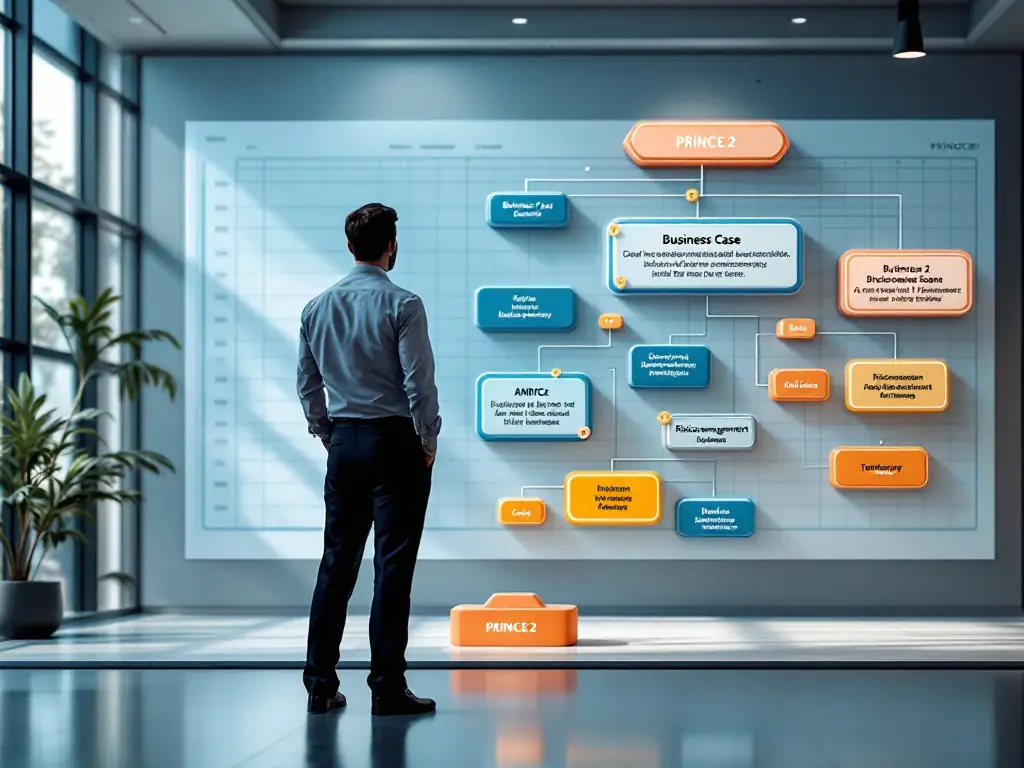
PRINCE2 is one of the most widely used project management methodologies worldwide, but not all components are equally easy to apply. The most difficult components of PRINCE2 are often the Business Case principle, effective risk management, and working with tolerances. These elements require not only theoretical knowledge, but also practical insight and experience. For many project managers, the continuous validation of the Business Case throughout the entire project is a particular challenge, together with the systematic identification and management of risks in changing circumstances.
Why are some PRINCE2 components more difficult to implement than others?
PRINCE2 components vary in implementation complexity because some contain more abstract concepts that are difficult to translate into daily project activities. It is not just about understanding the theory, but especially about applying it in practice in your organization.
The complexity arises from three main factors:
- The gap between theory and practice – what works on paper can turn out very differently in reality
- Organisational culture – some PRINCE2 principles require a specific corporate culture to be effective
- The required balance between rigid methodology and flexibility in a changing environment
Most project managers find it more difficult to apply components that require constant attention throughout the entire project. PRINCE2 is designed as a comprehensive framework, but in practice, many organizations opt for a customized implementation where they focus on the elements that add the most value.
Integration with existing working methods within an organization can also be quite a challenge. When PRINCE2 clashes with established processes, resistance arises that makes implementing certain components extra difficult.
What makes the Business Case principle so challenging within PRINCE2?
The Business Case principle is one of the most problematic parts of PRINCE2 because it requires you to continuously assess and validate the business justification of the project. This is not a one-off activity but an ongoing process throughout the entire project lifecycle.
The biggest challenges here are:
- Quantifying intangible benefits – how do you measure “improved customer satisfaction” in euros, for example?
- Keeping the Business Case up to date when project circumstances change
- Making honest and realistic estimates without optimism bias
- Linking project results to strategic organizational objectives
The timing aspect also makes it complex: the Business Case must be drawn up at an early stage, when there are still many uncertainties. At the same time, you must make decisions based on the same Business Case throughout the project. This requires a balance between adhering to the original goals and responding flexibly to new insights.
Project managers often struggle to involve the right stakeholders in validating the Business Case. Without their input and commitment, the Business Case loses its value as a management tool.
Why do project managers struggle with risk management in PRINCE2?
Risk management within PRINCE2 is challenging because it requires systematic and proactive thinking in an environment that is often reactive. Project managers must not only identify risks but also implement and monitor appropriate controls.
The main stumbling blocks in risk management are:
- Distinguishing between real risks and common project challenges
- Quantifying both the likelihood and impact of identified risks
- Finding the right balance in risk management – too little attention is dangerous, too much leads to paralyzing bureaucracy
- Communicating about risks without being seen as a pessimist
Another common problem is the tendency towards risk aversion within organizations. PRINCE2 recognizes that risks can also be opportunities, but in practice, many project teams focus only on the negative aspects of risks.
Maintaining the risk register also proves difficult in practice. The register is often viewed as an administrative obligation rather than a valuable project management tool. As a result, updating it is postponed or carried out superficially.
How can you effectively address the challenges of PRINCE2 tolerances?
PRINCE2 tolerances are challenging because they require you to set clear boundaries for deviations in terms of time, cost, quality, scope, risk and benefits. Addressing them effectively starts with realistically defining these tolerance limits in consultation with all parties involved.
Practical strategies to better manage tolerances include:
- Provide clear, measurable tolerances that are understandable to everyone
- Set different tolerances for different project levels (project, phase, work package)
- Document not only the tolerances themselves, but also the reasons behind them
- Make it clear in advance which escalation procedures apply if tolerances are in danger of being exceeded
An effective approach is to view tolerances as a steering mechanism rather than as hard limits. This means engaging in dialogue with stakeholders in a timely manner when approaching a tolerance limit, instead of waiting until the limit has actually been exceeded.
Regularly reviewing tolerances is also important. As the project progresses and more is known, tolerances may need to be adjusted. PRINCE2 provides the flexibility to do this, but in practice this often does not happen because people stick to the original plans.
Which strategies help to master the most difficult PRINCE2 components?
To better master the challenging PRINCE2 components, a pragmatic approach is essential. Start by selecting the components that add the most value for your specific project and organization. Not every PRINCE2 element is equally relevant in every situation.
Effective strategies include:
- Integrate PRINCE2 gradually – don't implement everything at once, but start with the most valuable elements
- Invest in continuous training and knowledge sharing within the project team
- Develop templates and tools that fit your organization
- Create a learning organization where experiences are shared and improvements are implemented
- Involve an experienced PRINCE2 coach in complex implementations
A balanced implementation is crucial – PRINCE2 is not an all-or-nothing methodology. The official method explicitly encourages adaptation to the project context, as long as you respect the core principles.
For organizations struggling with specific PRINCE2 components, external expertise can be valuable. Experienced professionals bring not only theoretical knowledge, but also practical experience in implementing PRINCE2 in different environments.
Would you like to know more about successfully implementing PRINCE2 in your organization? Then please contact us. We are happy to share our knowledge and experience to help you master the most challenging aspects of PRINCE2.