

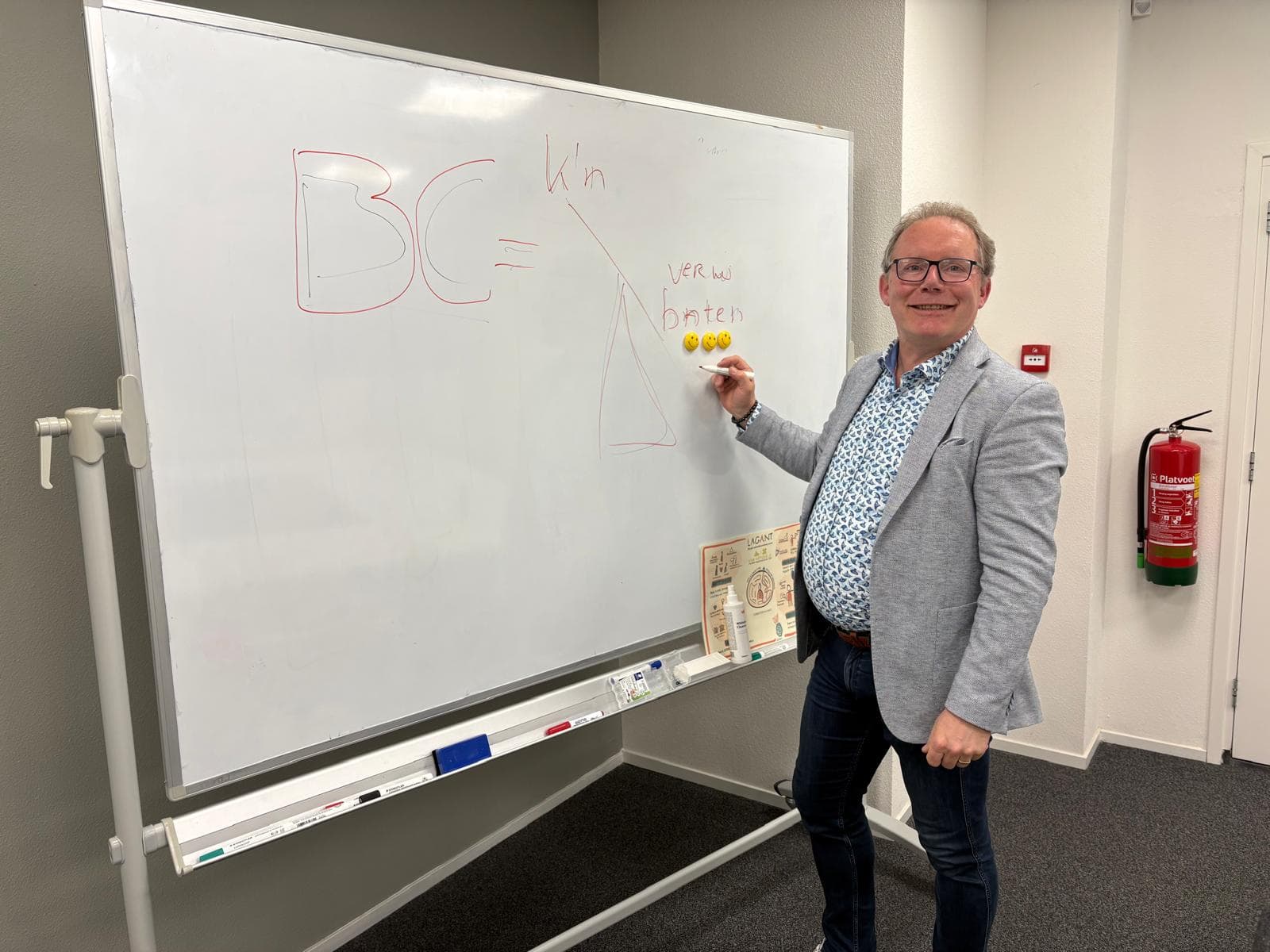
What is a business case according to PRINCE2?
The business case is the basis of your decision-making within a project. It shows whether a project is worthwhile. A business case provides insight into the benefits, costs, and why it makes sense to start and continue.
In methods such as PRINCE2, we call this the business justification of a project. Throughout the entire project, the business case remains the guiding principle for determining whether you are still on the right track.
Why is a business case more than a financial document?
A business case is much more than a paper tiger proving that your project yields more than it costs. The business case is, par excellence, a way to make people feel why their work matters.
And no, that might not be the first thing you learn when studying PRINCE2 from a book. There you learn that the business case is the basis for decision-making. And that is correct. After all, one of the most important principles of PRINCE2 is that a project must actually deliver added value.
The investment must be logical, and the return must outweigh the costs. But in practice, you can get much more out of your business case. A sharp and updated business case motivates people.
Because there is nothing as nice as working on a project where you think:
👉 What we achieve together here is truly meaningful
👉 What we do here makes the work better
👉 What we do here ensures satisfied customers
👉 What we do here makes the organization smarter
👉 What we do here makes people's lives easier
Because ultimately, we all want to contribute to something bigger than ourselves. No one is going to run faster just because something is written somewhere in a document in a folder. People do get moving when they understand the added value they are creating together.
How do you make a business case a living document?
You turn a business case into a living document in 5 simple steps:
Step 1: Continue to actively use the business case in conversations
A business case only comes to life when you regularly refer to it in meetings and decision-making moments. Only then does it become part of how a team thinks, and not something drafted at the very beginning and then forgotten.
Step 2: Translate figures into concrete value
Make it concrete. Numbers are, well, numbers. They don't say much. As soon as you translate the numbers from the business case into what actually improves for a user or organization, people understand why their work matters, and the abstract business case suddenly becomes something tangible.
Step 3: Use the business case as a test for every choice
Refer to your business case at every meeting and decision-making moment. Check whether what you are doing supports the chosen course of action. And if it doesn't, have the courage to decide not to do it. That is how you turn your business case into a compass.
Step 4: Visibly appreciate the team's contribution
The moment you explicitly show people how their work contributes to the business case, motivation arises. Simply because they see that their effort is directly linked to the added value.
Step 5: Consciously stop doing what adds no value
This might be daunting at first, but it pays off so much: Is something not working? Stop doing it! Even if it concerns your project. It is precisely by letting go of work without impact that space is created for what really matters. That is the experience and logic in PRINCE2.
Why does everyone need to know the business case?
For a project to succeed, it is important that everyone has the same vision. That vision, the business justification, is set out in your business case. And of course, your team does not need to know the business case down to the last detail. It is about the big picture, so that everyone is on the same page.
It sounds logical, but in practice, you often see teams and stakeholders lose sight of the common thread as the project progresses. As a result, a project can constantly deviate just slightly, creating noise and fragmentation. You prevent this by keeping both the team and the stakeholders focused on the content.
The most magical part? When teams know your business case well, you see that something changes. Team members take ownership of their own tasks because decisions no longer come solely from the top, but are supported by everyone who contributes to them.
You don't learn this from books.
At Lagant, we believe that you learn by doing. That is why all our trainers have extensive practical experience. This tip, the business case as a motivational document, is a best practice from PRINCE2 trainer Mark . Would you like to discover even more project management hacks like this? Then take a PRINCE2 training course at Lagant.